
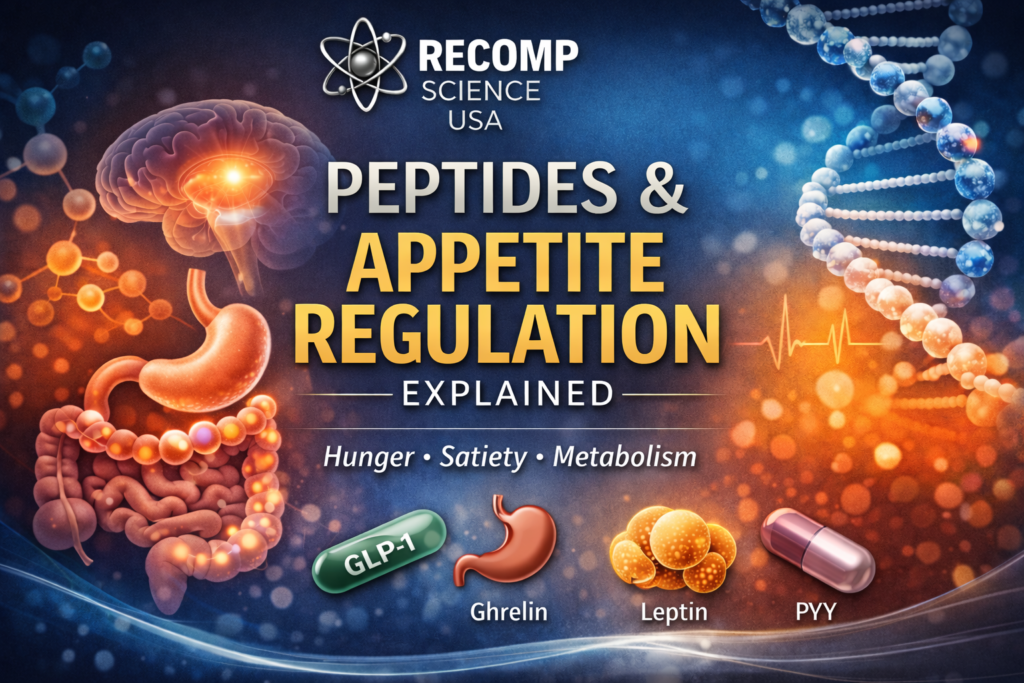
How signaling molecules influence hunger, satiety, and metabolic balance
Introduction
Appetite regulation is a complex process controlled by hormones, the brain, and cellular signaling pathways. In recent years, peptides have gained attention for their role in influencing hunger signals and metabolic processes.
In this blog, we’ll break down how peptides interact with appetite regulation systems, the science behind them, and how they fit into broader wellness discussions.
What Are Peptides?
Peptides are short chains of amino acids that act as signaling molecules in the body. They help regulate many physiological functions, including:
Hormone release Metabolism Tissue repair Hunger and satiety signals
Unlike full proteins, peptides are smaller and often act quickly within specific pathways.
How Appetite Is Regulated in the Body
Appetite is primarily controlled by the interaction between the gut and the brain—often referred to as the gut-brain axis.
Key components include:
Hypothalamus – the brain’s hunger control center Hormones – chemical messengers that signal hunger or fullness Digestive system – releases peptides based on food intake
Two main types of signals exist:
Hunger signals (increase appetite) Satiety signals (reduce appetite)
Key Peptides Involved in Appetite Regulation
1. GLP-1 (Glucagon-Like Peptide-1)
GLP-1 is one of the most well-known peptides related to appetite.
Functions:
Promotes feelings of fullness Slows gastric emptying Supports blood sugar regulation
It is naturally released after eating and signals the brain to reduce food intake.
2. Ghrelin (The Hunger Hormone)
Ghrelin is often referred to as the “hunger hormone.”
Functions:
Stimulates appetite Increases before meals Signals the brain to initiate eating
Higher ghrelin levels are associated with increased hunger.
3. Leptin
Leptin helps regulate long-term energy balance.
Functions:
Signals fullness Helps regulate body weight Communicates fat storage levels to the brain
Leptin resistance may impact how effectively the body recognizes fullness.
4. Peptide YY (PYY)
PYY is released in the gut after eating.
Functions:
Reduces appetite Slows digestion Promotes satiety
It works alongside GLP-1 to signal fullness.
5. CCK (Cholecystokinin)
CCK is released when fats and proteins are consumed.
Functions:
Promotes satiety Aids digestion Signals the brain to stop eating
How Peptides Influence Appetite
Peptides influence appetite by acting on receptors in the brain and digestive system. Their effects include:
Delaying stomach emptying Enhancing satiety signals Modulating hunger hormones Supporting metabolic signaling pathways
These processes help maintain energy balance and regulate food intake.
Peptides and Metabolism
Appetite regulation is closely tied to metabolism. Certain peptides are involved in:
Blood glucose regulation Energy expenditure Fat metabolism signaling
This connection explains why appetite-related peptides are often studied in the context of metabolic health.
Important Considerations
-Peptides discussed in research are often part of complex biological systems
-Individual responses can vary widely
-Lifestyle factors (diet, sleep, activity) play a major role in appetite regulation
Final Thoughts
Peptides play a critical role in how the body regulates hunger and fullness. By understanding these signaling pathways, we can better appreciate the complexity of appetite and metabolic balance.
As research continues, peptides remain an important area of study in understanding how the body maintains energy homeostasis
Explore More
If you found this helpful, check out our related articles: