A Simple, Science-Based Guide to How the Body Uses Energy
Learn what metabolism is, how it works, and what influences it. A simple, science-based guide to understanding energy use in the body.
What Is Metabolism? (Simple Definition)
Metabolism refers to the chemical processes that occur within the body to maintain life.
These processes control how the body:
Uses energy Breaks down nutrients Builds and repairs tissues
In simple terms:
Metabolism is how your body converts what you consume into usable energy and function.
The Two Main Types of Metabolism
Metabolism is made up of two key processes:
1. Catabolism
This is the process of breaking down molecules to release energy.
Examples include:
Breaking down carbohydrates into glucose Using stored fat for energy
2. Anabolism
This is the process of building molecules needed for structure and function.
Examples include:
Building muscle tissue Repairing cells
How Metabolism Works in the Body
Metabolism takes place at the cellular level, where nutrients are converted into energy.
The body uses this energy to:
Support daily activity Maintain internal balance Power biological functions
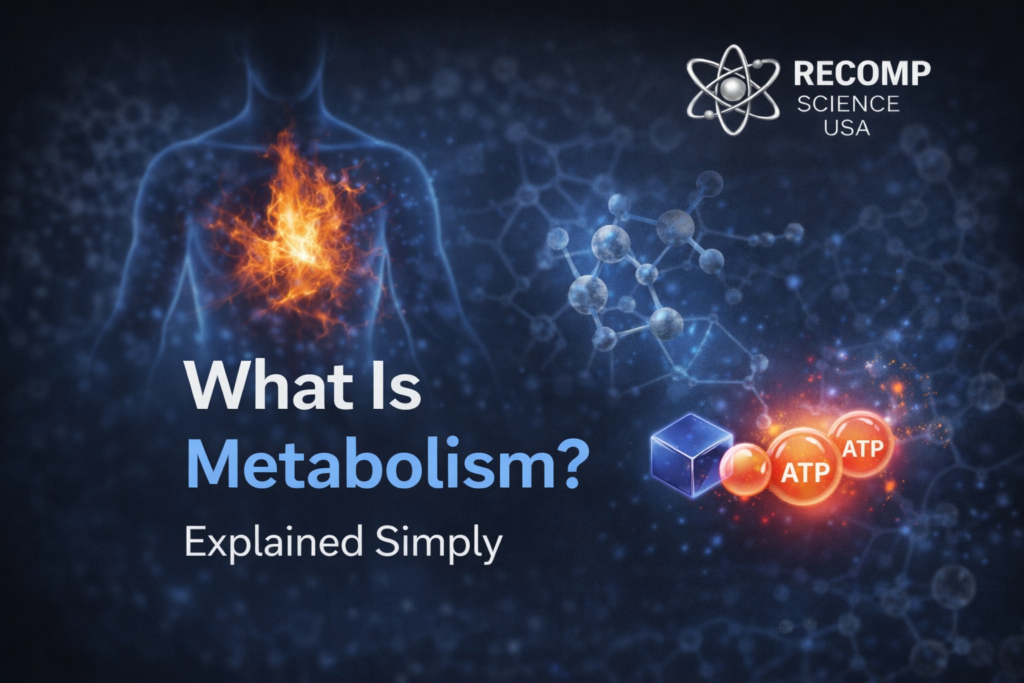
A key molecule involved in this process is ATP (adenosine triphosphate), which acts as the body’s primary energy carrier.
What Influences Metabolism?
Metabolism is not controlled by a single factor.
It is influenced by multiple variables, including:
Nutrition (types and amounts of food consumed) Physical activity Sleep and recovery Hormonal signaling Genetics
This is why metabolism varies from person to person.
Where Peptides Fit In
Metabolism is regulated through complex signaling systems within the body.
Peptides are part of these systems, helping with:
Cellular communication Signaling between tissues Regulation of biological processes
To learn more, read:
——-> How Peptides Influence Metabolism
Common Misconceptions About Metabolism
“Metabolism is just how fast you burn calories”
Not exactly. It includes all chemical processes, not just calorie burn.
“You can control metabolism with one thing”
Metabolism is influenced by multiple systems working together, not a single factor.
“Metabolism is fixed”
Metabolism can vary depending on lifestyle and biological factors.
Why Understanding Metabolism Matters
Learning how metabolism works can help you:
Better understand how the body uses energy Interpret health and wellness information more accurately Avoid oversimplified or misleading claims
Continue Learning
To build a deeper understanding, explore:
Amino Acids vs Peptides vs Proteins
How Peptides Influence Metabolism
Final Takeaway
Metabolism is the foundation of how the body functions.
It involves:
Energy use Nutrient processing Biological regulation
And it works through interconnected systems, not isolated parts.